-

Mobile phone: 13724352725
-

Email: liliangbin@szsyjm.com
-

Phone: 0755-22715304

Mobile phone: 13724352725
Email: liliangbin@szsyjm.com
Phone: 0755-22715304

 Current Location : Home > News
> Industry news
Current Location : Home > News
> Industry news
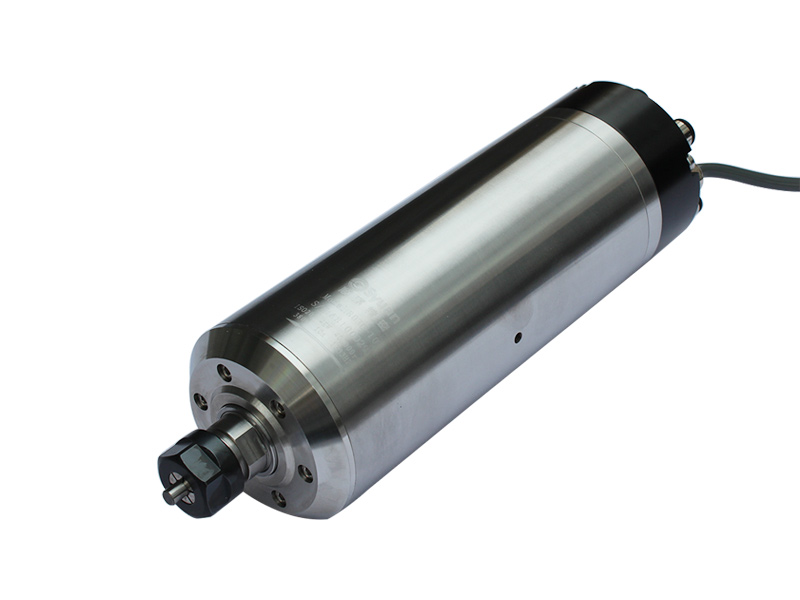
In CNC machine tools, synchronous electric spindles usually use variable frequency speed regulation. There are currently three main control methods: ordinary variable frequency drive and control, vector control drive and control, and direct torque control. So, what are the differences between these three control methods?
The common frequency conversion of synchronous electric spindle is scalar drive and control, and its driving and control characteristics are constant torque drive, with output power proportional to speed. The dynamic performance of ordinary variable frequency control is not ideal, with poor control performance at low speeds, unstable output power, and no C-axis function. However, due to its low price and simple structure, it is generally used in grinding machines and ordinary high-speed milling machines.
The vector control technology of synchronous electric spindle imitates the control of DC motor, using rotor magnetic field orientation and vector transformation methods to achieve driving and control, with good dynamic performance. The vector control driver has a large torque value in the early stage of startup, and the electric spindle itself has a simple structure and low inertia, so the startup acceleration is large, which can achieve the allowable maximum speed immediately after startup. This type of driver has two types: open-loop and closed-loop. The latter can provide feedback on position and speed, not only with better dynamic performance, but also with C-axis functionality; The former has slightly poorer dynamic performance and does not have C-axis function, but it is cheaper in price.
Direct torque control (DTC) is a new high-performance AC speed regulation technology developed after vector control technology. Its control idea is novel, the system structure is simple and clear, and it is more suitable for driving high-speed electric spindles. It can better meet the dynamic and static characteristics requirements of high-speed electric spindles such as high speed, wide speed range, and high-speed instantaneous stop. It has become a hot technology in the field of AC transmission.
Through comparison, it can be seen that the direct torque control method is more suitable for driving synchronous electric spindles. The designed electric spindle direct torque control system has good dynamic and static characteristics. Applying the direct torque control method to the electric spindle drive control system is feasible and more suitable for the fast response requirements of high-speed CNC machine tool drive control systems.
E-mail:liliangbin@szsyjm.com
Address:A2 Building,Second row,Baishixia west area,Fuyong Town, Baoan District, Shenzhen
 Home
Home Products
 Tel
Tel Map
Map